If you own a deep residential lot in York Region and you’ve wondered whether it could become more than one house, this page is about a Stouffville property where the answer was twelve.
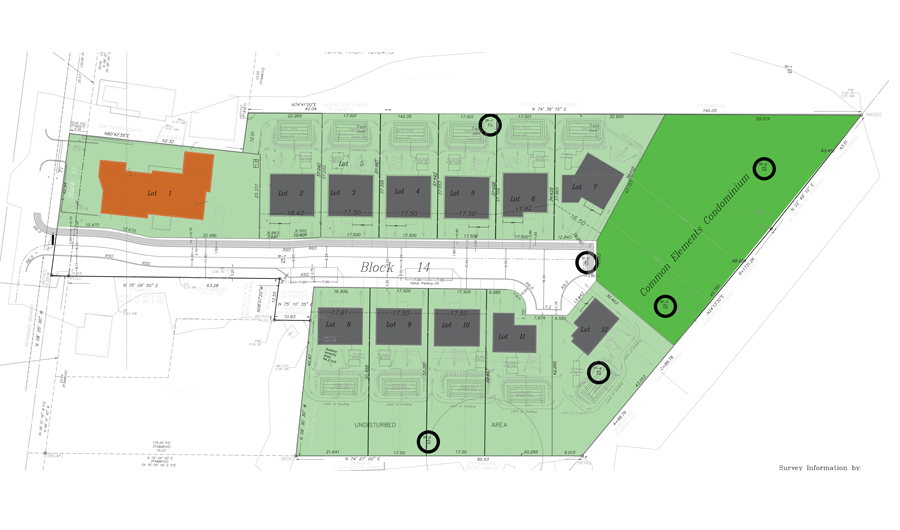
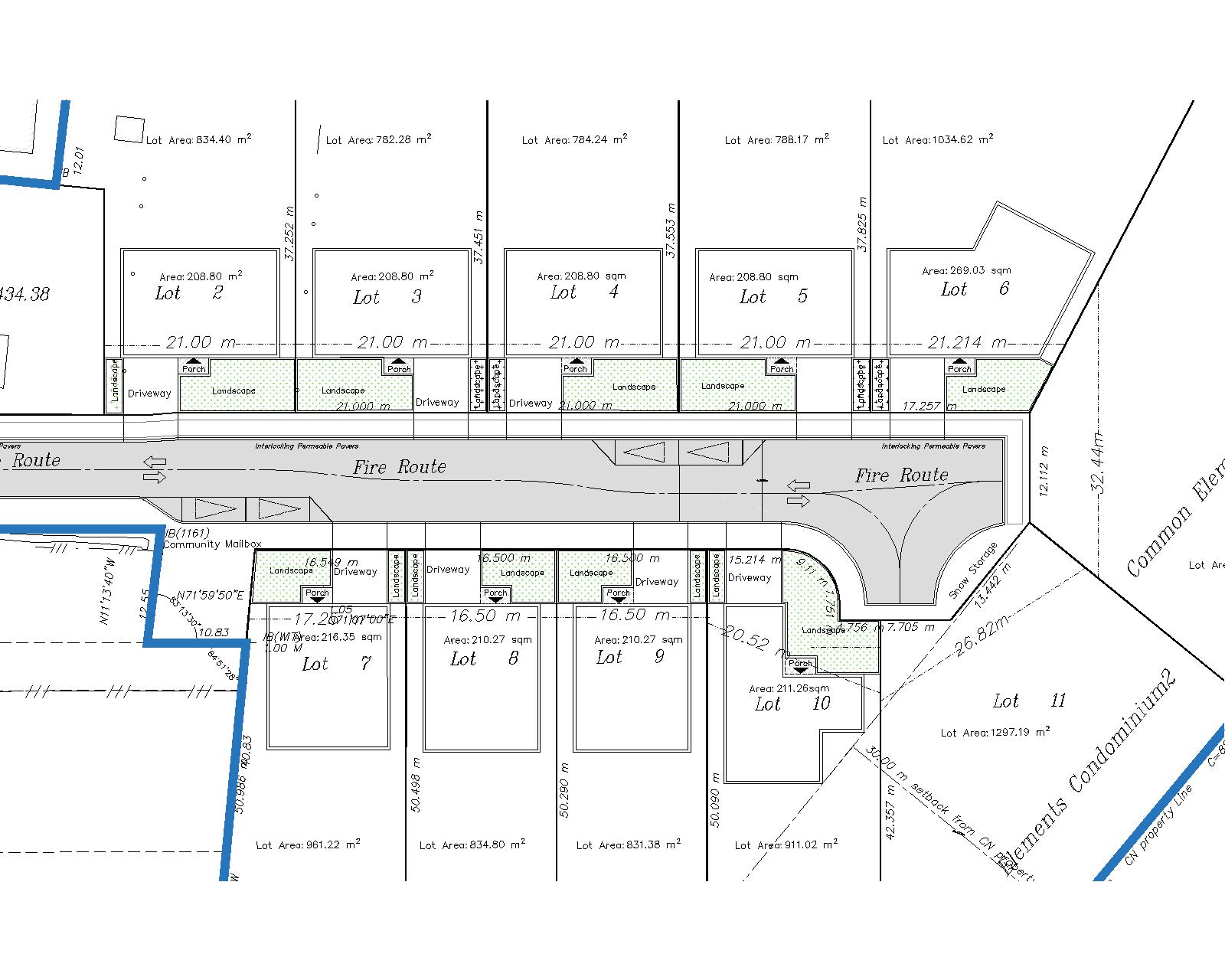
A 160,000 square foot lot on Woodbine Avenue started with a single bungalow. Today it’s an approved 12-lot common element condominium — twelve homes, a private internal road, a landscaped acoustic berm against the CN rail corridor, and a registered design framework that protects every owner’s resale value.
This is the kind of project most landowners don’t realize is possible on their property. Here’s what made it work.
Before any design work begins, every multi-lot project in Ontario faces this fork. The answer determines cost, timeline, and what the finished development looks like.
Choose a common element condominium when:
Choose a plan of subdivision when:
For Woodbine, the road is private and the scale is 12 lots. Common element condominium was the clear answer. A plan of subdivision would have meant building the internal road to full municipal standards and dedicating it to the Town of Whitchurch-Stouffville — significant additional cost, no benefit at sale.
For most landowners with a deep lot and private internal access, common element condominium is the structure that makes the project feasible.
We tested several configurations before settling on twelve.
The site has no municipal sanitary sewer, so every home runs on a private septic system. The Ontario Building Code sets minimum sizes for septic fields and required separation distances from wells, property lines, and the rail corridor. Those rules — not the developer’s ambitions — set the maximum density.
Twelve was the count where each lot could accommodate a code-compliant septic system, a reserve area for future replacement, and a buildable footprint sized for a 2,500 to 3,200 sq.ft. home that fits the Stouffville streetscape.
This is the work most landowners never see. Anyone can sketch 14 lots on a site plan. The discipline is knowing which sketches will actually get approved and built. We start every land development project with a feasibility review for exactly this reason.
The southern property line backs onto an active CN rail line. The standard solution is a 30-metre buffer, which on this site would have been roughly a fifth of the developable land.
We solved it differently. Working with acoustic consultants and civil engineers, we designed a landscaped earth berm along the southern property line. The berm meets railway sound attenuation requirements, screens the rail corridor visually, and adds environmental character to the development. It also let us preserve far more usable land than a flat setback would have.
This is what coordinated design actually looks like — three disciplines (architecture, acoustics, civil) producing one solution rather than three competing ones.
A 12-lot subdivision sells over time. The first homes set the tone. Without enforceable rules, the last lots inherit whatever the early owners chose to build. One out-of-place house affects every neighbour’s resale value.
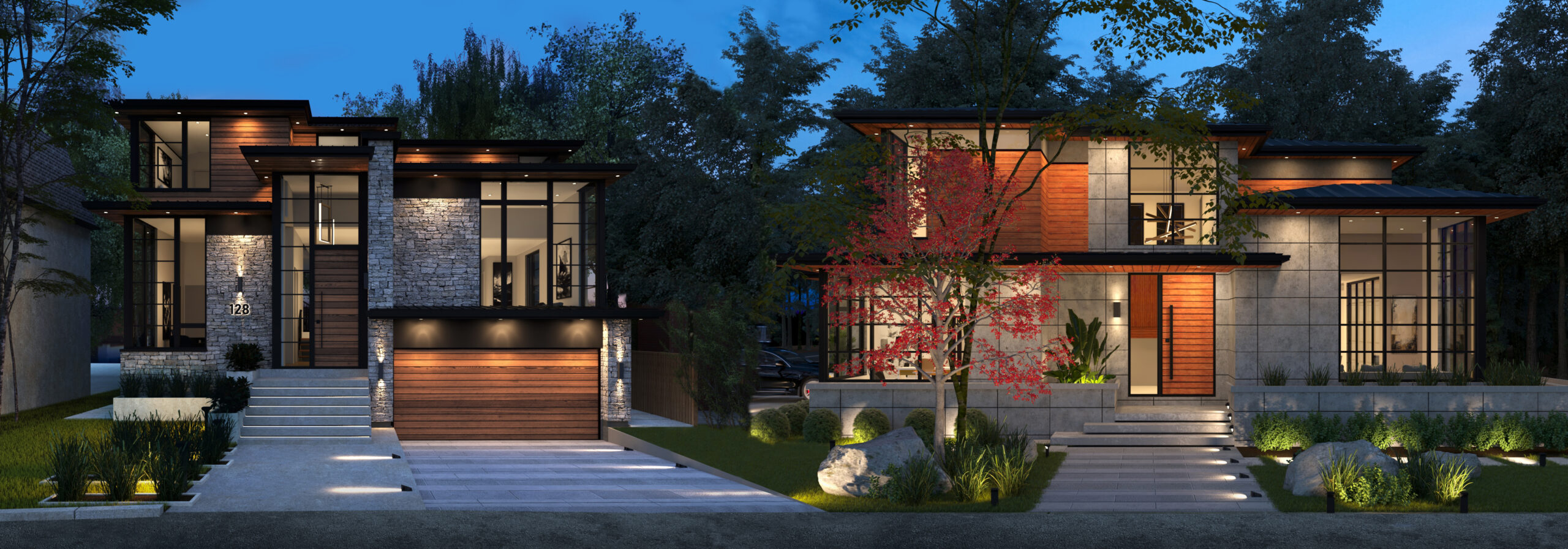
We prepared an Architectural Control Guideline registered against the development. It governs massing, rooflines, materials, and landscaping — defining a clear design band rather than mandating a single style. Each owner has full freedom within that band.
The Town accepted the Zoning Bylaw Amendment partly because the Guideline was in place. The homeowners get a coordinated streetscape that holds value over time. The developer gets resale prices on lots 8 through 12 that aren’t undermined by what was built on lots 1 through 3.
This is the part that’s almost impossible to add after the fact, and the part that distinguishes a designed development from twelve unrelated houses sharing a driveway.
Coordination across acoustic consultants, civil engineers, conservation authority requirements, the Town of Whitchurch-Stouffville’s planning department, and the Ontario Building Code. Quadrant Architects led the Zoning Bylaw Amendment and Site Plan submissions, prepared the Architectural Control Guideline, and coordinated the consultant team through approvals.
The questions that decide whether a site like yours works are answerable in a single feasibility meeting:
We do this review before any design work begins. You walk away knowing what your property can actually support, with the constraints and the approval pathway clearly mapped.
Project lead: Sara Rahgozar, M.Arch, OAA — Principal, Quadrant Architects
Contact: sara@quadrantarchitects.com | 416-357-5713